
A crypto asset freeze happens in one of three ways: an exchange restricts your account, the Office of Foreign Assets Control (OFAC) blocks the asset under sanctions law, or a government agency seizes it through a warrant. In every case, your access is cut off, but ownership is not automatically lost. The first move is always the same: preserve every record you have and find out, in writing, why the hold happened.
TL;DR:
- Most crypto freezes occur through exchange holds, which can be resolved by the platform’s compliance or legal team, often after a written request for the reason.
- OFAC sanctions blocks require reporting blocked property within 10 business days and continue annual filings until the designation is lifted.
- Government seizures are enforced via warrants and civil in rem actions, transferring control of the asset to authorities, often before criminal charges are filed.
- Owners must immediately preserve all transaction records, avoid moving funds, and seek legal counsel when facing formal notices or large-scale confiscations.
- Stablecoins like USDT can be blacklisted or reissued by issuers during enforcement, while self-custody wallets resist enforcement efforts unless device or key issues are involved.
Table of Contents
- What Does It Mean When Crypto Assets Are Frozen?
- Who Can Freeze Crypto and How Do They Do It?
- Seizure vs. Forfeiture: The Legal Mechanics You Need to Know
- What to Do If Your Crypto Is Frozen: A Prioritized Checklist
- How Do Exchanges and Stablecoin Issuers Actually Enforce a Freeze?
- Recent U.S. Enforcement Examples and What They Teach
- How Specialized Counsel Handles a Frozen Crypto Case
- What Owners Get Wrong When Their Crypto Freezes
- How Murphy’s Law Helps When Your Crypto Is Frozen
- Primary Sources for Crypto Asset Freeze Procedures
- Sources
- FAQ
What Does It Mean When Crypto Assets Are Frozen?
A crypto asset freeze is not one event. It is three distinct legal and technical actions that get lumped together under the same phrase, and mixing them up is the fastest way to make a bad situation worse.
Exchange or custodian holds are the most common version. A platform like Coinbase restricts withdrawals or logins on your account, usually tied to KYC/AML review, a fraud flag, a suspicious login pattern, or a subpoena the platform received about your account. Coinbase’s own support documentation confirms the platform may block customer funds when required by law and advises account holders to request the stated reason. That single request, made in writing, is often the most useful thing you can do in the first hour.
OFAC blocks are a different animal entirely. When the Treasury Department designates a wallet address, exchange, or individual under sanctions, any U.S. person holding or processing that virtual currency has a legal duty to block it, deny access, and report the blocked property to OFAC. This isn’t discretionary. Under OFAC’s virtual currency guidance, U.S. persons must report blocked virtual currency within 10 business days and continue filing annual reports for as long as the block remains in place. If your funds touched a sanctioned address, even unknowingly through a mixer or a compromised counterparty, this is the mechanism that likely triggered the freeze.
Government seizures are the most severe category. Here, a law enforcement agency has obtained a warrant, often through an in rem civil action against the property itself, and taken operational control of the asset. This typically follows a criminal investigation, a fraud complaint, or a civil forfeiture action, and it moves the funds into a government-controlled address almost immediately.
Telling these apart matters because the response differs sharply:
- An exchange hold usually resolves through the platform’s own compliance department or a formal legal demand.
- An OFAC block requires either proving the transaction was mistaken or applying for a specific license to unblock the property.
- A government seizure requires navigating a forfeiture proceeding, filing a claim within the deadline, and often retaining litigation counsel.
If you’re not sure which one you’re facing, the notice language is the tell. Exchange emails cite account policy or compliance review. OFAC-related freezes reference sanctions regulations or a specific designation. Seizure notices come from a U.S. Attorney’s Office or reference a case number and a warrant.
Who Can Freeze Crypto and How Do They Do It?
Four types of actors hold the technical and legal keys to freezing digital assets in the United States, and each uses a different lever.
Exchanges and custodians control the account layer. When you hold crypto on a hosted platform, the exchange controls the private keys, not you. That means a hold is as simple as flagging an account in the platform’s back end. The exchange retains full transaction history, IP logs, device fingerprints, and KYC documentation, all of which become critical if the account later becomes part of a legal dispute or an investigation.
Stablecoin issuers have a freeze mechanism that surprises a lot of crypto holders. Because tokens like USDT are administered centrally, the issuer can add an address to a blacklist function embedded in the smart contract, effectively freezing the tokens where they sit, or burn them and reissue equivalent value to a different address entirely. DOJ seizure filings have documented cases where issuers were asked to freeze or reissue tokens to law-enforcement-controlled addresses as part of executing a warrant. This is an administrative control, not a blockchain consensus mechanism, and it works precisely because the issuer sits in the middle of every transaction involving that token.
Law enforcement agencies secure crypto through seizure warrants and cooperation letters sent directly to custodians. If your funds sit at an exchange, a warrant served on that exchange can freeze the account without you ever being contacted first. The DOJ’s Asset Forfeiture Policy Manual lays out the seizure planning process agencies follow, including a dedicated section on handling cryptocurrency specifically because it behaves differently than cash or real property.
Courts, through civil litigation, can also order asset freezes independent of a criminal case. A creditor or fraud victim can seek a temporary restraining order or preliminary injunction against a specific wallet or exchange account while a case proceeds.
- Exchanges: account-level holds triggered by compliance flags or legal demands
- Stablecoin issuers: contract-level blacklisting or token burn and reissue
- Law enforcement: seizure warrants served on custodians or in rem actions against the property
- Courts: civil injunctions freezing specific accounts pending litigation
Pro Tip: If your funds moved through an exchange at any point, that exchange is almost always the most productive point of contact for both freezing and unfreezing action, because it holds records neither you nor the blockchain can produce on their own.
Platform compliance controls, particularly IP screening and KYC verification, matter here for a reason beyond triggering freezes. They also create the paper trail that makes recovery possible later. An anonymous wallet with no exchange touchpoint is nearly impossible to connect to a real identity. A wallet that touched a KYC-verified exchange account, even briefly, gives investigators and attorneys something to subpoena.
Seizure vs. Forfeiture: The Legal Mechanics You Need to Know
Seizure and forfeiture are not the same event, and confusing them leads people to give up rights they still have. Seizure is the government taking physical or operational control of an asset. Forfeiture is the separate legal process that actually transfers title, permanently, from the owner to the government. A seized asset can still be returned. A forfeited one, absent a successful legal challenge, cannot.
The DOJ’s Asset Forfeiture Policy Manual treats these as distinct phases with distinct procedural requirements, and cryptocurrency gets its own subsection because moving and custody-ing digital assets require different planning than seizing a car or a bank account.
Most crypto seizures proceed through an in rem action, meaning the case is filed against the property itself rather than against a person. You’ll see case captions like “United States v. Approximately 4.2 Bitcoin.” This structure lets the government act even before, or without, criminally charging anyone, because the legal theory is that the property itself is connected to unlawful activity.
Civil forfeiture requires the government to show, generally by a preponderance of the evidence, that the property is linked to criminal conduct. Criminal forfeiture attaches to a conviction and requires proof beyond a reasonable doubt as part of the underlying criminal case. Civil forfeiture moves faster and doesn’t require a conviction, which is why it’s the more common path in crypto seizure matters.
Timelines are where owners lose rights without realizing it:
- 10 business days: the window U.S. persons have to report blocked virtual currency to OFAC once an OFAC-related block occurs.
- Annual reporting: continues for as long as the property stays blocked under an OFAC designation.
- Claim filing windows: after a formal forfeiture notice, claimants typically have a limited period, often 30 to 60 days depending on the notice, to file a claim asserting an interest in the property. Missing this deadline can mean losing the right to contest forfeiture entirely.
- Notice delivery date: the clock on your claim window starts from actual delivery, not from when the underlying seizure happened, which is why preserving the original notice and its headers matters more than people expect.
Recent enforcement activity shows the scale involved. A Secret Service press release from July 2026 documented more than $25 million in cryptocurrency recovered across multiple investigations, traced address by address through commingled transfers before landing at identifiable exchange deposits. Recoveries of that scale only happen when investigators can build a clean chain of custody, and the same principle applies in reverse: an owner trying to prove a claim needs equally clean documentation.
Do not treat a seizure notice as the final word. It marks the start of a legal process, not the end of one, and the deadlines inside that process are unforgiving to anyone who waits to see what happens next.
What to Do If Your Crypto Is Frozen: A Prioritized Checklist
Act in this order. Skipping ahead, especially to moving funds, can permanently damage your legal position.
- Preserve every original record immediately. Export wallet transaction histories, save exchange CSVs, capture device images if a device is implicated, and do not touch metadata timestamps. The IRS and DOJ both rely on original, unaltered electronic data during examinations and investigations, and altered copies raise spoliation concerns that can undermine your credibility later. A step-by-step evidence preservation guide walks through exactly what to save and how.
- Request a written explanation from the platform. Ask specifically why the account was restricted and keep every notice, email, and support ticket. If 30 days pass with no resolution on an exchange freeze, there’s a specific set of documents you should send to escalate.
- Do not move funds, swap tokens, or use a bridge to “get ahead of” the freeze. Transfers made after a freeze notice look like evasion to investigators and can convert a civil matter into something with criminal exposure. This is also the moment scammers pretending to be “recovery specialists” target victims. Do not pay anyone promising guaranteed unfreezing.
- Report to the right agency, and know the order of operations. If fraud triggered the freeze, report to local law enforcement and the FBI’s Internet Crime Complaint Center. If the freeze stems from a sanctions designation, your reporting duty runs to OFAC directly under the 10 business day rule. If you suspect the freeze is connected to an active federal investigation, consult counsel before making contact, since an uncoordinated report can complicate a parallel legal strategy.
- Hire counsel once the freeze involves a forfeiture notice, an OFAC designation, or funds above a threshold that justifies litigation. Counsel will immediately want the original notice, your complete transaction history, KYC records from every touched platform, and a chronological narrative connecting the events.
Pro Tip: Build your transaction narrative as a simple timeline document from day one, listing dates, amounts, wallet addresses, and platform touchpoints in order. Attorneys and investigators both work faster with a clean timeline than with a folder of disconnected screenshots.
If your case involves stolen funds rather than a compliance freeze, a broader legal options overview for crypto fraud victims covers civil recovery paths that run parallel to any freeze-related process.
How Do Exchanges and Stablecoin Issuers Actually Enforce a Freeze?
The technical reality behind a freeze depends heavily on custody and token design, and that distinction shapes what’s even possible to recover.
Self-custody wallets present a hard limit for enforcement. If you hold your own keys, no court order can reach into the blockchain and freeze your Bitcoin directly. Enforcement instead targets you, the person, through device seizure, compelled key production, or contempt proceedings if you refuse a court order. This is slower and procedurally heavier than a custodial freeze, which is part of why self-custody remains attractive despite the risks.
Hosted custody flips that entirely. The exchange controls the keys, so a hold is an account-level flag, not a blockchain operation. This is also why an exchange deposit is operationally decisive for recovery: it’s the one point where a real-world identity, through KYC, connects to a wallet address.
Stablecoin issuers sit somewhere in between. Because tokens like USDT run on a smart contract the issuer administers, the issuer can blacklist an address or burn and reissue tokens without touching the underlying blockchain’s consensus rules. DOJ filings confirm issuers have cooperated with law enforcement this way during active seizures, which native-chain assets like Bitcoin simply cannot replicate.
- Self-custody: enforcement targets the person and device, not the wallet itself
- Hosted custody: enforcement is an account-level flag the platform controls directly
- Stablecoins: issuer-level blacklisting or burn and reissue, independent of blockchain consensus
- Swaps, bridges, and commingling: these obscure the trail, making exchange and issuer touchpoints the practical chokepoints for both enforcement and recovery
A breakdown of how blockchain forensics actually works covers the clustering and tracing techniques investigators use to follow funds through these obscuring layers.
Recent U.S. Enforcement Examples and What They Teach
Public filings and press releases give a clearer picture of how freezes and seizures play out than any hypothetical explanation can.
| Example type | What happened | Practical lesson |
|---|---|---|
| Stablecoin issuer cooperation | DOJ seizure filings describe Tether being asked to freeze or reissue USDT tokens to law-enforcement-controlled addresses during active investigations | Issuer-administered tokens carry a freeze risk native-chain assets don’t; the issuer is a real enforcement point |
| In rem seizure filing | DOJ court attachments in in rem suits describe seized cryptocurrency placed into government-controlled addresses, with token burning treated as a normal part of execution | Courts have accepted these operational mechanics as routine, so owners shouldn’t expect procedural resistance to slow a well-supported seizure |
| Multi-address tracing operation | A Secret Service investigation recovered more than $25 million in cryptocurrency in July 2026 by tracing commingled transfers across dozens of addresses to identifiable exchange deposits | Recovery scales with tracing quality; clean, address-by-address documentation is what actually moves cases forward |
The pattern across these examples is consistent. Investigators succeed when they can connect anonymous on-chain movement to a real-world identity, almost always through an exchange or issuer touchpoint. Owners and victims who want the same outcome, whether they’re defending against a wrongful freeze or pursuing recovery of stolen funds, need the same thing: a documented, chronological, address-level record. A guide to the six steps investigators use to trace stolen crypto breaks this process down in more detail.
Speed matters as much as documentation quality. Funds sitting untouched at an exchange are far easier to freeze and recover than funds already swapped through three bridges and a mixer. Every filing referenced here shows agencies moving fast once they identify the intermediary holding the funds, which is exactly the window where an owner’s own quick documentation can make the difference between recovery and a permanent loss.
How Specialized Counsel Handles a Frozen Crypto Case
Once a freeze crosses into forfeiture territory, an OFAC designation, or a dispute large enough to justify litigation, counsel brings tools an individual owner simply doesn’t have access to alone.
Emergency relief is often the first move. Preservation letters put custodians on notice not to alter or destroy records. Where funds are actively moving or at risk, counsel can seek an ex parte temporary restraining order or preliminary injunction to freeze the situation in place while the underlying dispute gets litigated. Filing a timely claim in a forfeiture proceeding also requires precise procedural knowledge, since a missed deadline can end the case before it starts.
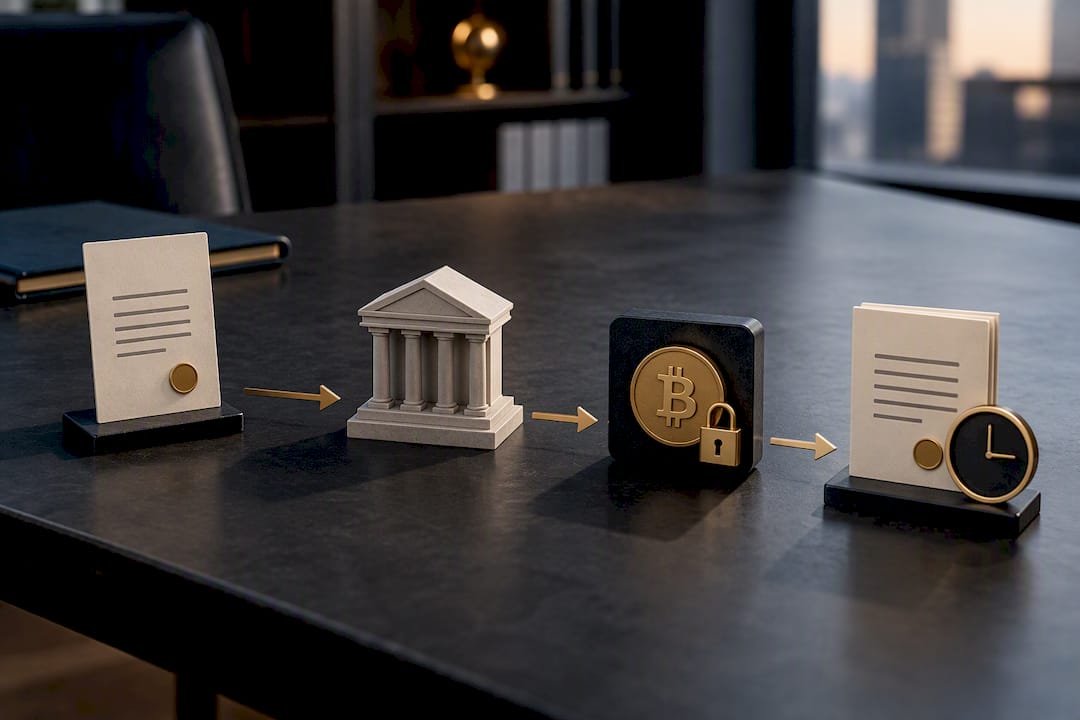
Investigative support runs alongside the legal filings. Blockchain forensics identifies where funds moved and where they landed. Subpoenas compel exchanges and other custodians to produce records that a private party can’t obtain on their own. Coordinating directly with law enforcement can also accelerate a case that might otherwise sit in a queue.
Regulatory work covers the sanctions and tax side: preparing OFAC reports and license applications, and managing interactions with the IRS and federal prosecutors when a case touches both civil and criminal exposure.
- Preservation letters and emergency injunctive relief to stop further loss
- Blockchain tracing and forensic subpoenas to identify intermediary touchpoints
- OFAC license applications and reporting for sanctions-related blocks
- Coordination with prosecutors and regulators across parallel civil and criminal tracks
A crypto-specialized law firm with litigation experience has handled cases involving Celsius, Terraform Labs, and BitMEX. That litigation background matters specifically because crypto freeze disputes rarely resolve through a phone call to support. They resolve through filings, deadlines, and courtroom advocacy.
What Owners Get Wrong When Their Crypto Freezes
The single most common mistake is treating a freeze notice as a closed door instead of the opening move in a legal process. People move funds to “protect” them, delete logs out of panic, or hire an unlicensed recovery service promising guaranteed results. All three make a recoverable situation worse.
Platform remedies are worth exhausting first when the freeze is a compliance flag with no forfeiture notice attached. Once a forfeiture filing, OFAC designation, or serious dollar amount enters the picture, waiting on a support ticket stops being a strategy. As a rule of thumb: if you haven’t gotten a substantive answer within a week, or you’ve received any formal legal notice at all, that’s the point to bring in counsel rather than keep waiting.
— Mark
How Murphy’s Law Helps When Your Crypto Is Frozen
Murphy’s Law is a litigation-first crypto law firm, not an unregulated “recovery service” charging upfront fees for vague promises. When your crypto is frozen, that distinction determines whether you get real legal leverage or just another support ticket. The firm handles the tools that actually move a frozen-asset case forward: emergency injunctive relief to stop further loss, temporary restraining orders for urgent situations, blockchain tracing to identify where funds landed, forfeiture defense, and OFAC compliance guidance for sanctions-related blocks.
Before an initial consult, gather what you already have: the original freeze notice with its full headers, your exchange transaction history, any KYC records tied to affected accounts, and a simple chronological timeline of what happened. That preparation alone often shortens the path to a real legal strategy. Start by reviewing the firm’s crypto fraud recovery and litigation services and reach out with your documentation in hand.
Primary Sources for Crypto Asset Freeze Procedures
The procedural details in this guide come directly from federal agency guidance and public court filings, which readers facing an active freeze should consult alongside counsel.
- OFAC virtual currency FAQs, covering blocking duties and the 10 business day reporting requirement
- DOJ Asset Forfeiture Policy Manual, including the cryptocurrency seizure planning subsection
- Representative DOJ seizure filing showing in rem custody and execution language
- IRS Internal Revenue Manual on administrative summons authority for exchange records
- Compliance and data-handling due diligence practices, relevant to preserving intermediary records, are outlined in Pattrn Data’s platform guidance
This article is general information, not a substitute for advice from a qualified lawyer. Consult a qualified legal professional about your own circumstances before acting on anything here.
Sources
- OFAC – FAQs (topic 1626)
- Asset Forfeiture Policy Manual (U.S. Department of Justice)
- IRS Internal Revenue Manual — administrative summons and inspections
FAQ
Can the IRS see your crypto wallet?
The IRS cannot see into a private wallet directly, but it doesn’t need to. Under its administrative summons authority, the agency can compel exchanges to produce transaction histories and KYC data, which is usually enough to connect a wallet address to a real identity during an examination or investigation.
What’s the difference between crypto seizure and forfeiture?
Seizure is the government taking operational control of an asset, while forfeiture is the separate legal process that transfers ownership permanently. A seized asset can still be returned; a forfeited one generally cannot, according to the DOJ’s Asset Forfeiture Policy Manual.
How do I know if my crypto freeze is from OFAC?
An OFAC-related freeze typically references sanctions regulations or a specific designated address in the notice, rather than generic account policy language. U.S. persons holding blocked property have a legal duty to report it to OFAC within 10 business days.
Can Tether freeze my USDT?
Yes. Because USDT runs on a contract Tether administers, the issuer can blacklist an address or burn and reissue tokens, including in cases where DOJ filings requested this action as part of executing a seizure warrant. Native-chain assets like Bitcoin don’t have an equivalent issuer-level control.
What should I do first if my crypto assets are frozen?
Preserve every original record you have, including wallet exports and exchange transaction histories, and request a written explanation from the platform. Avoid moving funds or paying any third party promising guaranteed unfreezing, and if a forfeiture notice or OFAC designation is involved, contact counsel through a firm like Murphy’s Law promptly.