
The SEC has shifted away from broad “regulation by enforcement” toward targeted interpretive guidance and a proposed tailored rulemaking regime. The two documents driving this change are the SEC’s 2026 interpretive release clarifying how securities laws apply to crypto assets and the proposed Regulation Crypto Assets framework. If you hold digital assets or run a crypto business, the immediate move is to review your token’s legal exposure and talk to counsel before the comment window closes.
TL;DR:
- Businesses must reassess their tokens’ legal status now that the SEC classifies digital assets into categories like securities, commodities, or utilities based on function rather than defaulting to securities status.
- The SEC is shifting focus toward cases involving direct investor harm, such as exchange misconduct and manipulated token launches, while dropping technical registration issues without victim impact.
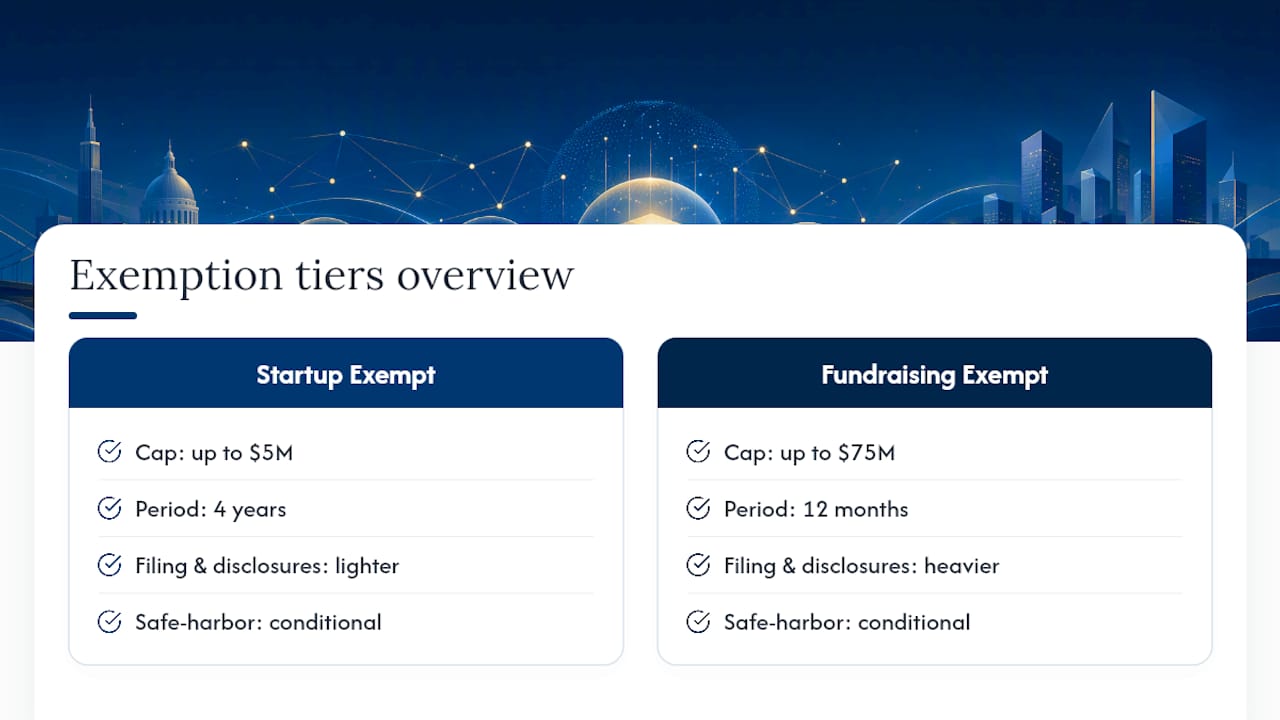
- The proposed exemptions for token offerings include a startup tier up to $5 million over four years and a fundraising tier up to $75 million annually, both with specific disclosure and safe harbor conditions.
- Companies should document decentralization milestones, tighten recordkeeping, and evaluate promotional language to prepare for potential SEC inquiries or enforcement actions.
- Defense strategies now benefit from the formal “separation” concept, allowing some tokens to exit security classification over time if decentralization milestones are met, influencing how cases are litigated or settled.
Table of Contents
- SEC Crypto Enforcement Activity: The Numbers Behind the Shift
- How the SEC’s 2026 Interpretive Guidance Classifies Crypto Assets
- Regulation Crypto Assets: Exemptions, Safe Harbor, and Deadlines
- What Investors and Crypto Businesses Should Do Right Now
- A Brief History of SEC Crypto Enforcement
- Landmark SEC Crypto Cases Worth Understanding
- SEC Enforcement Alongside the CFTC, FINRA, and States
- Where SEC Crypto Policy Is Headed Next
- How SEC Enforcement Reshaped ICOs and Token Offerings
- Common Defenses in SEC Crypto Enforcement Cases
- Why This Regulatory Shift Changes Litigation Strategy
- How Murphy’s Law Handles Enforcement Defense and Recovery
- Sources
- FAQ
SEC Crypto Enforcement Activity: The Numbers Behind the Shift
The SEC’s own account of its crypto enforcement record is blunt: numerous enforcement actions and substantial penalties, with the agency acknowledging that several of those cases delivered no measurable benefit to investors. That admission, tucked into the Regulation Crypto Assets proposal, is the clearest signal yet that the Commission is rethinking volume-driven enforcement. Reporting from The Block characterized several 2026 dismissals as a tacit admission that prior cases misread how securities law applies to decentralized assets.
Quick fact: The SEC has cited numerous crypto-related enforcement actions totaling billions in penalties, with several since dismissed as the agency recalibrates its approach.
Three units still drive crypto cases day to day:
- The Crypto Task Force, which coordinates policy and stakeholder engagement across the Commission
- The Cyber and Emerging Technology unit, focused on fraud involving novel technology
- The Division of Enforcement’s broader crypto docket, covering registration failures, books-and-records violations, and market manipulation
The bulk of past actions targeted unregistered offerings, inadequate recordkeeping, and outright fraud. Going forward, expect the SEC to concentrate resources on cases involving direct investor harm, such as exchange misconduct or manipulated token launches, rather than technical registration gaps in projects with no victims. That reallocation is visible in which pending matters got dropped and which stayed active.
How the SEC’s 2026 Interpretive Guidance Classifies Crypto Assets
The interpretive release sorts digital assets into functional categories rather than treating every token as a potential security by default. A token can fall into buckets like a digital commodity, a collectible, a utility tool, a stablecoin, or a digital security, and the label determines which rules apply. This taxonomy comes from the release itself, published through the Federal Register, and it does not replace the Howey test. It clarifies how the agency applies that decades-old framework to modern crypto activity.
For airdrops, staking, mining, and wrapped tokens, the guidance walks through Howey factor by factor. An airdrop tied to marketing promises of price appreciation looks different from one distributed purely to bootstrap network participation. Staking rewards administered by a centralized entity that actively manages returns raise more flags than rewards generated by protocol-level consensus mechanics the recipient does not control.
The guidance also formalizes “separation,” the idea that a token can start life inside an investment contract and later exit it once purchasers no longer reasonably expect profit from a promoter’s managerial effort. The Federal Register text frames this as a factual inquiry, not a one-time label.
Watch for these risk signals when evaluating your own token or project:
- Marketing language that promises returns or price appreciation
- A founding team or foundation retaining outsized managerial control over protocol decisions
- Absence of documented decentralization milestones showing declining reliance on a central promoter
- Token distribution mechanics that mirror a securities offering rather than a functional airdrop
Regulation Crypto Assets: Exemptions, Safe Harbor, and Deadlines
The proposed rule creates two exemption tiers. A startup exemption allows issuers to raise up to $5 million over four years with lighter obligations, aimed at early-stage projects that need capital without a full registration burden. A fundraising exemption raises that ceiling to $75 million per 12-month period, better suited to more mature projects planning a broader token distribution.
Quick fact: Regulation Crypto Assets proposes a startup exemption allowing offerings up to a moderate amount over several years and a fundraising exemption permitting larger offerings within a year.
Both tiers connect to a conditional safe harbor from investment contract status. Meeting the conditions, which touch on disclosure, decentralization progress, and limits on insider sales, means the token offering falls outside standard securities registration even though it originated as a capital raise. That distinction matters for issuers structuring token economics, since the proposal’s reporting and financial statement triggers are foreseeable enough to plan around during the design phase rather than after launch.
Each tier carries its own filing and ongoing disclosure obligations, scaled to the amount raised. Larger raises under the fundraising exemption face heavier periodic reporting than the startup tier. The proposal was published in the Federal Register with a formal public comment period, and legal teams tracking the rulemaking should monitor the Crypto Task Force page for updates on comment deadlines and potential revisions before a final rule takes effect.
What Investors and Crypto Businesses Should Do Right Now
Start with a triage exercise. Classify every token, staking product, or fundraising activity your business runs against the interpretive guidance’s categories, then map every public representation and promise your team has made about returns. Check whether custody arrangements and existing disclosures match what the SEC now expects under the new framework.
- Inventory your tokens and activities against the classification framework and flag anything resembling a digital security.
- Tighten recordkeeping, transaction logs, and governance documentation, since books-and-records gaps remain a core enforcement focus regardless of the policy shift.
- Document decentralization milestones as they happen, since these become evidence supporting a “separation” argument later.
- If you receive a subpoena or civil investigative demand, preserve all relevant records immediately and retain counsel before responding to any request.
- If you are an investor who has already lost funds to fraud rather than a legitimate but troubled project, pursue forensic tracing and civil remedies separately from any SEC action, since the agency’s enforcement priorities do not replace your private right to recover assets.
Pro Tip: Do not respond to an SEC civil investigative demand on your own timeline. The scope of what you produce shapes the rest of the investigation, and an early misstep in a CID response is far harder to undo than a delayed one.
Businesses facing an active inquiry should look at how to respond to a crypto regulatory inquiry before drafting anything. Investors chasing lost funds have a different path, outlined in how to recover stolen cryptocurrency, and it runs through civil litigation rather than regulatory complaint.
A Brief History of SEC Crypto Enforcement
SEC crypto enforcement began in earnest during the 2017-2018 ICO boom, when the agency treated a wave of token sales as unregistered securities offerings under existing law with no crypto-specific rulemaking to guide issuers. That era set the template: enforcement actions doing the work that clear rules should have done.
The years that followed brought escalating scrutiny of exchanges, lending platforms, and staking programs, with the SEC leaning on the Howey test case by case rather than publishing comprehensive guidance. Industry critics called this approach “regulation by enforcement,” arguing that companies had no reliable way to know whether their token or product violated securities law until the SEC filed a complaint against them specifically.
By the early 2020s, enforcement volume climbed steadily, reaching the 95 actions and $2.3 billion in penalties the agency now cites as its own historical tally. Momentum shifted again once the Crypto Task Force began systematic stakeholder engagement, feeding into the 2026 interpretive release and the Regulation Crypto Assets proposal.
That history matters for anyone facing a current inquiry. Cases opened under the older enforcement-first posture may now sit awkwardly against a Commission that has publicly admitted some of that work was misdirected. Whether that admission helps a specific respondent depend heavily on the facts of the case and where it sits in the litigation timeline. It is not a blanket defense.
Landmark SEC Crypto Cases Worth Understanding
A handful of matters shaped how courts and practitioners think about applying Howey to digital assets, even though this article does not name specific ongoing client matters. Exchange registration cases established that a platform facilitating trading in tokens deemed securities can itself face registration violations independent of the token issuer’s own liability. Staking-as-a-service cases tested whether centrally managed reward programs meet the “efforts of others” prong of Howey, generally finding that heavily managed programs look more like investment contracts than passive custody arrangements.
Token issuance cases involving public sales with marketing materials promising price appreciation became the clearest fact pattern for a Howey violation, since the promotional language did most of the evidentiary work. Cases lacking that kind of promotional promise proved much harder for the agency to win, which helps explain why several were later dismissed once the interpretive framework caught up with the underlying legal theory.
The common thread across these matters is that outcomes turned on specific facts: what was said publicly, who controlled the network, and whether purchasers had any reasonable expectation of centrally driven profit. Cases with strong documentary evidence of profit promises and centralized control tend to settle or result in judgments against defendants. Cases resting on ambiguous facts about decentralization, or where the SEC applied Howey inconsistently with its own later guidance, are the ones now facing dismissal or weaker footing.
SEC Enforcement Alongside the CFTC, FINRA, and States
Crypto businesses rarely deal with just one regulator, and jurisdictional overlap creates real strategic complexity. The CFTC claims authority over crypto commodities and derivatives markets, while the SEC’s jurisdiction covers assets and transactions meeting the definition of a security. A single token can attract attention from both agencies depending on whether it trades as a spot commodity, underlies a derivatives contract, or was originally distributed through an investment contract. Readers weighing this overlap can find a fuller breakdown in SEC vs. CFTC crypto jurisdiction.

FINRA oversees broker-dealers and their crypto-related activities, meaning a registered firm offering crypto trading services faces FINRA supervision on top of any SEC scrutiny of the underlying assets. State regulators add another layer entirely. Many states run their own securities enforcement units and money-transmitter licensing regimes, and a state attorney general can pursue a crypto company even when the SEC declines to act, or in parallel with a federal case.
This multi-agency landscape means a single business decision, like how a token is marketed or how staking rewards are administered, can trigger exposure on several fronts simultaneously. The DOJ’s recent memo narrowing criminal enforcement priorities toward investor-victim crimes adds yet another data point: federal criminal, civil, and state regulators are not always moving in lockstep, and a matter that draws no SEC action could still attract state or DOJ attention.
Where SEC Crypto Policy Is Headed Next
The interpretive guidance and Regulation Crypto Assets proposal are not the end state. Both emerged from sustained input through the Crypto Task Force, and that body continues to solicit stakeholder feedback on open questions the interpretive release did not fully resolve, including how custody rules apply to self-hosted wallets and how disclosure obligations scale for decentralized autonomous organizations.
The proposed rule remains subject to a formal comment period, and the Commission can revise provisions like the exemption thresholds or safe harbor conditions before finalizing anything. Businesses and counsel tracking the rulemaking should monitor the SEC’s crypto enforcement actions page for how the agency applies the interpretive framework to live cases, since enforcement decisions in the near term will show how seriously the Commission intends to follow its own new guidance.
Expect incremental guidance rather than a single comprehensive statute. Congress has floated broader crypto market structure legislation for years without passing it, which leaves the SEC’s interpretive and rulemaking authority as the primary near-term source of clarity. Firms building compliance programs now should treat the current framework as a floor, not a ceiling, and build in flexibility for further refinement.
How SEC Enforcement Reshaped ICOs and Token Offerings
The 2017-era ICO boom collapsed almost entirely under enforcement pressure, and that history still shapes how token offerings get structured today. Projects that once ran open public sales with minimal disclosure now default to private placements, accredited-investor-only rounds, or foreign issuance specifically to avoid U.S. securities exposure, sometimes at the cost of excluding U.S. retail participation altogether.
Regulation Crypto Assets is a direct response to that chilling effect. The startup and fundraising exemptions exist because the SEC recognized that its enforcement-first approach pushed legitimate capital formation offshore or into structures that avoided U.S. markets rather than complying with them. A tailored offering regime gives issuers a defined path instead of a guessing game.
For businesses currently planning a token launch, the practical impact is a menu of structuring choices that did not exist a few years ago: qualify for the startup exemption, scale into the fundraising exemption, or pursue the conditional safe harbor if decentralization milestones support it. Each path carries distinct disclosure and reporting obligations, and choosing wrong can mean restructuring an offering mid-raise. Startups mapping this out should review compliance records and metrics crypto startups must keep before finalizing any token distribution plan.
Common Defenses in SEC Crypto Enforcement Cases
Respondents in SEC crypto matters have relied on a narrow but effective set of defenses. Arguing that a token fails one or more Howey prongs, most often the “efforts of others” element, remains the most direct challenge, particularly where a network has genuinely decentralized since its initial distribution. The separation concept in the 2026 interpretive guidance gives this defense firmer footing than it had before, since the agency itself now recognizes that an asset’s legal status can change over time.
Procedural defenses matter too. Challenges to the SEC’s jurisdiction, arguments that a transaction occurred entirely outside U.S. markets, and statute of limitations defenses have all produced favorable outcomes in specific matters. Given the agency’s own dismissals and acknowledged missteps, respondents in older cases have also argued that enforcement decisions were inconsistent with how the Commission now interprets the same conduct.
Outcomes vary widely by fact pattern. Cases with clear promotional promises of profit and centralized control tend to end in settlements or consent judgments. Cases resting on ambiguous decentralization facts increasingly end in dismissal or favorable summary judgment, especially post-2026. Settlement remains common because litigation against the SEC is expensive and lengthy, but the shifting interpretive landscape has given defense counsel more leverage to negotiate remediation terms rather than accept the harshest available penalty.
Why This Regulatory Shift Changes Litigation Strategy
The interpretive guidance does not eliminate Howey. It gives defense counsel a documented framework to argue separation, which is a meaningfully different posture than fighting the SEC’s ad hoc theories case by case. That shift changes the calculus on when to litigate versus settle.
Cases where a client can point to real decentralization milestones, reduced reliance on a founding team, and no history of profit-promising marketing are stronger candidates for litigation now than they were two years ago. Cases with clear promotional promises of returns still settle, because the guidance did not erase those facts. Liam Murphy’s litigation background, including matters touching Celsius, Terraform Labs, and BitMEX, informs how we read these fact patterns: courts and regulators respond to evidence, not to how sympathetic a defendant sounds.
For sophisticated clients, the practical takeaway is evidentiary. Document your decentralization timeline now, before an inquiry starts. Cases built on contemporaneous records beat cases built on after-the-fact narrative every time.
— Mark
How Murphy’s Law Handles Enforcement Defense and Recovery
Murphy’s Law offers crypto businesses and investors legal services applying these new rules to real cases, not just theoretical compliance advice. The firm provides regulatory defense for businesses facing SEC inquiries, builds compliance programs designed around the interpretive guidance and Regulation Crypto Assets framework, and litigates asset tracing and recovery cases for fraud victims.
Unlike unregulated “recovery” operators who promise to retrieve stolen crypto for an upfront fee and then disappear, Murphy’s Law is a licensed law firm with litigation experience in significant crypto cases. If you have received a civil investigative demand, are structuring a token offering under the new exemptions, or have lost funds to fraud and need forensic tracing paired with real legal remedies, explore your legal options for crypto fraud recovery and schedule a consultation before your response window closes.
This article is general information, not a substitute for advice from a qualified lawyer. Consult a qualified legal professional about your own circumstances before acting on anything here.
Sources
- SEC Clarifies the Application of Federal Securities Laws to Crypto Assets
- Federal Register: Application of the Federal Securities Laws to Certain Types of Crypto Assets
- SEC admits ‘flaws’ in past crypto enforcement, cites misreading of securities law | The Block
- DAG Todd Blanche Memorandum: Ending Regulation By Prosecution
FAQ
Does the SEC have jurisdiction over crypto?
Yes, but only over crypto assets and transactions that meet the legal definition of a security under the Howey test; commodities and most derivatives fall to the CFTC instead.
Did XRP win the lawsuit against the SEC?
That litigation produced a mixed ruling distinguishing between institutional sales, which a court found met securities criteria, and certain programmatic sales, which did not; it became an early example of the fact-specific analysis the 2026 interpretive guidance now formalizes.
Can the IRS see your crypto wallet?
The IRS can obtain wallet and transaction information through exchange reporting requirements, subpoenas, and blockchain analytics tools, and most centralized exchanges already report user activity under existing tax rules.
What is the SEC’s new guidance on crypto?
The SEC’s 2026 interpretive release clarifies how the Howey test applies to airdrops, staking, and wrapped tokens, and introduces a “separation” concept allowing some tokens to exit investment contract status over time; it pairs with the proposed Regulation Crypto Assets rule offering tailored exemptions for smaller and mid-size raises.